

Choosing the Right Home Ventilation: Heat Recovery, HRV, Positive Pressure, and Heat Transfer Explained
If you are weighing up home ventilation options, you are not alone. Modern homes are often more airtight, which is great for efficiency but not so great for moisture and stale air. The right system keeps humidity in check, reduces mould risk, filters pollen and pollutants and helps your heating work more efficiently. In this guide, you will learn how heat recovery, positive pressure and heat transfer systems work, where each fits best, how they compare on comfort, energy and cost, and how Modserve can help you choose the right setup for your home.
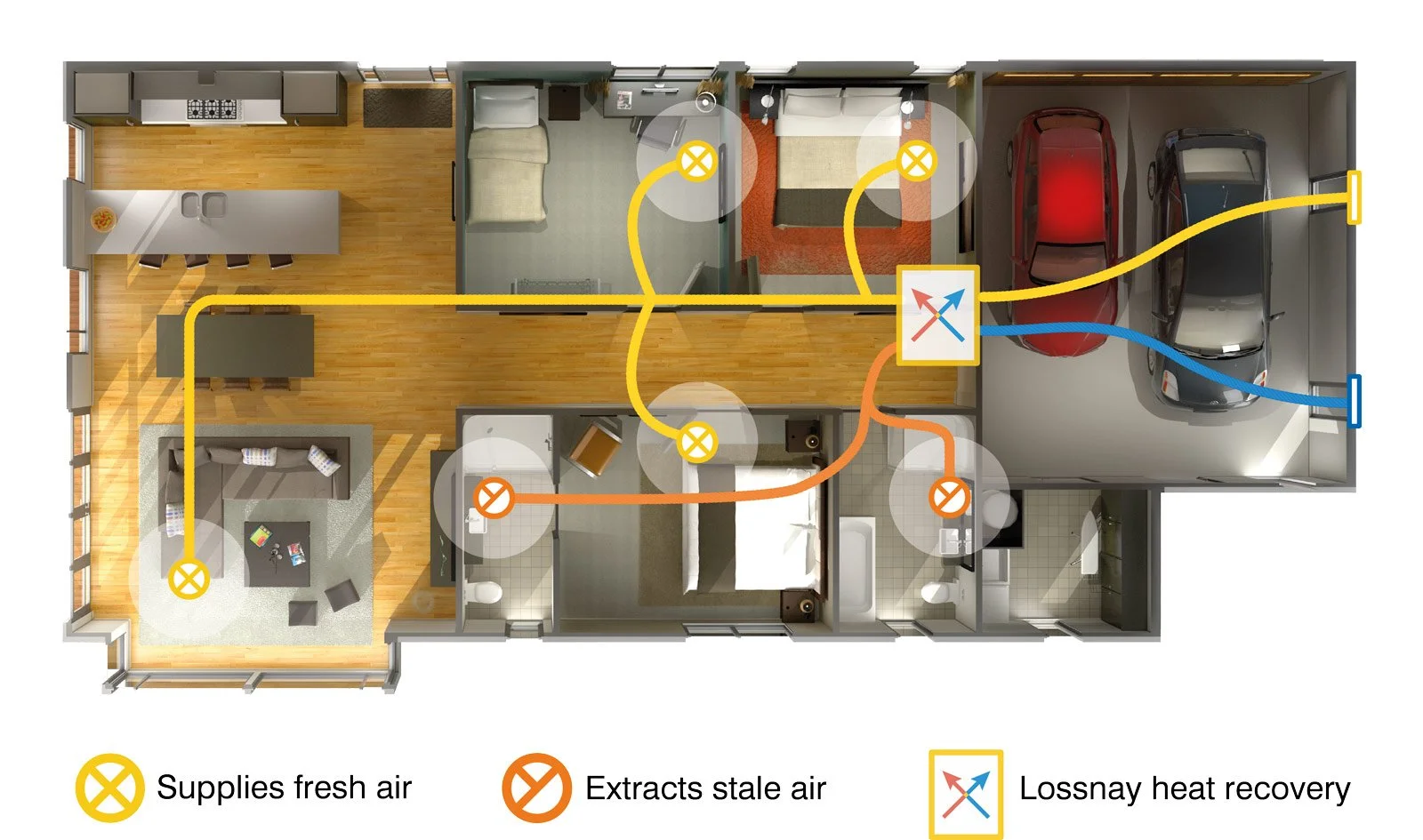
Example of Lossnay HRV System
What each system does, in plain terms
Heat Recovery Ventilation, or HRV
HRV is a type of balanced system with a heat exchanger. A fan supplies filtered outdoor air while another extracts stale indoor air, keeping indoor pressure roughly equal to outdoors. As stale air leaves, its heat energy is transferred to the incoming fresh air in winter, and in summer the reverse process helps temper warmer outside air. Mitsubishi Lossnay style systems recover a large share of heat energy, improving comfort and reducing the heating or cooling load.Positive Pressure Ventilation, or PPV
A single fan brings filtered air from the roof space or outside and gently pressurises the home. Stale air leaks out through gaps and vents. It is simpler, but performance depends on the source air quality and the home’s leakage paths.Heat Transfer systems
These are not ventilation. A fan and ductwork move warm air from a hot room, typically around a wood burner or a powerful heat pump, to other rooms. They redistribute existing heat; they do not supply fresh air or control moisture.
HRV versus PPV, and when to use each
When PPV (Positive Pressure Ventilation) is appropriate?
PPV can be a pragmatic choice for older, leakier homes with limited budget where roof space air is dry and not contaminated by dust or fumes. It can reduce condensation by flushing moist air out through leaks. It is less suitable for airtight homes, for homes with contaminated or hot roof spaces, or where outdoor air needs higher grade filtration.Where HRV (Heat Recovery Ventilation) shines
HRV excels in new builds and retrofits that are relatively airtight, in homes with recurring condensation and mould, and for households prioritising indoor air quality and efficiency. With higher grade filters, HRV can also help reduce allergens and fine particulates. In cool climates or airtight homes, HRV improves comfort by pre‑warming fresh air in winter and can help reduce running costs by lowering the load on your heater or heat pump. Learn more about Mitsubishi Lossnay HRV.Heat transfer, used wisely
Add a transfer system when you already have a strong heat source in one room and want to share that warmth to adjacent rooms at low cost. Pair it with proper ventilation, since transfer kits do not manage moisture or provide fresh air.
Comfort, filtration, moisture and noise
Comfort
HRV (Heat Recovery Ventilation) tempers incoming air, so supply air feels closer to room temperature. PPV (Positive Pressure Ventilation) relies on leakage paths, so comfort and airflow distribution are less predictable. Heat transfer improves comfort in rooms that otherwise lag behind, but only when the source room is genuinely warm.Moisture control
HRV (Heat Recovery Ventilation) gives consistent extraction from wet rooms while supplying fresh air elsewhere, which is the best foundation for condensation and mould control. PPV (Positive Pressure Ventilation) can help in leaky homes, but if the home is tight it may push moist air into walls and ceilings rather than out of the building. Heat transfer does not reduce indoor moisture.Filtration
HRV (Heat Recovery Ventilation) systems typically offer replaceable filters, from coarse to fine grades. HRV systems like Lossnay can accommodate upgraded filters for pollen and finer particulates. PPV (Positive Pressure Ventilation) units have filters, but incoming air quality depends on intake location. Heat transfer does not filter air, it just moves it.Noise
All systems can be quiet when designed and installed well. HRV (Heat Recovery Ventilation) units with quality ducting and optional silencers are typically very quiet in living areas and bedrooms. PPV (Positive Pressure Ventilation) and transfer systems can be audible if fans run at high speed or ducting is undersized.
Installation complexity and running costs
Installation complexity
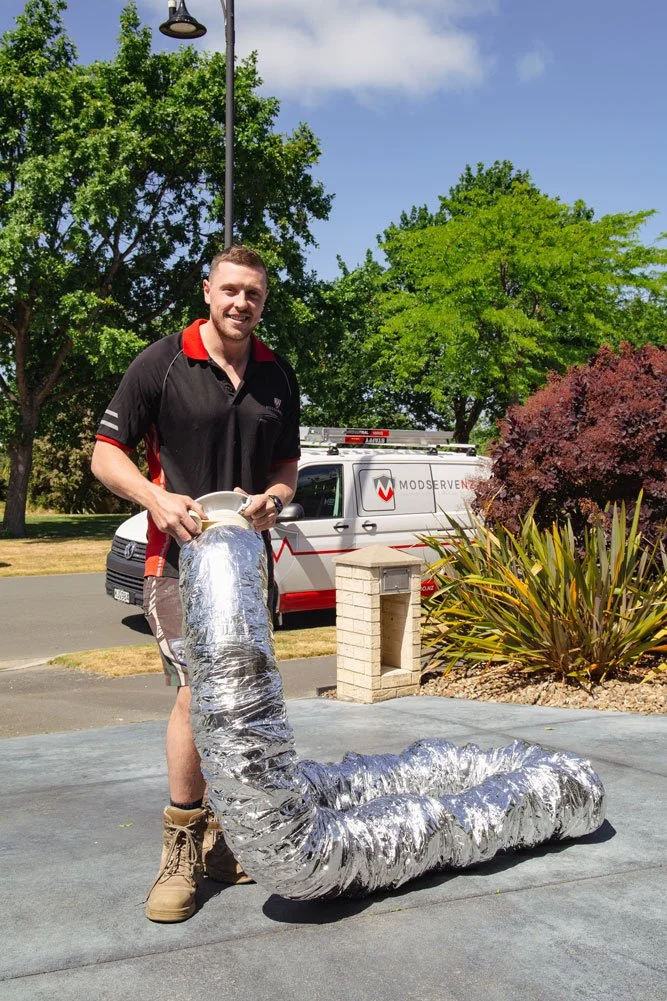
HRV (Heat Recovery Ventilation) involves the highest complexity. It requires unit placement, outdoor intake and exhaust penetrations, balanced ducting to supply and extract points, and condensate drainage.
PPV (Positive Pressure Ventilation), low to moderate. Single fan unit with supply ducting and intake, plus ceiling diffusers.
Heat transfer, low. Short duct runs from a warm room to one or more target rooms.
Running costs
HRV (Heat Recovery Ventilation), low electrical draw with energy recovery that reduces heating or cooling load, often the most cost effective over the lifecycle in cool climates.
PPV (Positive Pressure Ventilation), low electrical draw, performance sensitive to intake temperature and home tightness, may increase heating needs in cold weather if it introduces cooler air.
Heat transfer, low electrical draw, but it relies on a strong heat source. If the source is a heat pump, overall efficiency can still be high, especially with doors closed and rooms insulated.
Combining ventilation with heating or cooling
Pair HRV (Heat Recovery Ventilation) with a well sized heat pump to stabilise temperature and humidity. Ventilation manages moisture and CO2, while the heat pump delivers efficient heating and summer cooling. In homes with a primary heater in the lounge, a heat transfer kit can help even out temperatures to nearby rooms, but do not use it as a substitute for proper ventilation.
If you would like to learn more about filtration, controls and sizing for Christchurch homes, see our guide on improving air quality Christchurch . You can also explore our heat pump pages if you are considering combined systems, including heat pump Christchurch and heat pump installation Christchurch.
How Modserve helps you choose home ventilation well
A successful ventilation solution starts with a careful assessment. Modserve’s process is transparent and practical:
Home walkthrough
We look at layout, insulation, occupant needs, existing heating and typical problem areas for condensation or mould.Measured ventilation design
We size airflows by room, select intake and exhaust locations to avoid cross contamination, and specify filtration to suit allergies or local air quality.Energy and noise optimisation
For HRV (Heat Recovery Ventilation), we target high heat recovery with low specific fan power, plan duct runs to minimise pressure and choose silencers where needed.Clear options and pricing
You will see side by side recommendations, such as PPV (Positive Pressure Ventilation) as a budget option versus HRV (Heat Recovery Ventilation) for higher comfort and efficiency, including expected running costs, filter maintenance and service intervals.Certified installation and support
Our NZ registered electricians and trained HVAC (Heating, Ventilation and Cooling) technicians complete the install, commission the system, set up controls and provide maintenance guidance. We can integrate ventilation with ducted or split heat pumps for year round comfort.
Summary: match the system to your home and climate
Choose HRV (Heat Recovery Ventilation) if you want the best mix of fresh air, moisture control and energy efficiency, especially for airtight or newer homes.
Consider PPV (Positive Pressure Ventilation) for older, leakier homes on a budget, with care around intake air quality and potential heat loss in cold weather.
Use heat transfer to share heat from a strong source, but always pair it with proper ventilation.
Ready to make a plan for a healthier, drier and more comfortable home? Talk to Modserve about a tailored assessment and a right sized, energy efficient system that fits your layout and lifestyle.